Website from 2010 & 2012 Congressional race.
For archival purposes only.
THANK YOU FOR YOUR SUPPORT AND YOUR VOTE!
Website from 2010 & 2012 Congressional race. For archival purposes only.
Nick Popaditch is no longer a candidate for Congress or any other political office.
Nick Popaditch believes in Conservative American Values and Family Values.
Nicholas Allen Popaditch, a medically retired United States Marine Corps gunnery sergeant who gained fame as the "Cigar Marine", recipient of the Silver Star and Purple Heart, ran unsuccessfully as the 2010 Republican candidate for California's 51st congressional district, losing to incumbent Democrat Bob Filner. He ran again in 2012 in the 53rd congressional district, losing to incumbent Democrat Susan Davis.
This was his website for both campaigns.
Content is from the site's 2010-2012 archived pages.
2012 CAMPAIGN

OUR COUNTRY IS COUNTING
ON YOUR VOTE
I am not asking for your vote
as a Republican or Democrat,
but as an American.
It's not too late to turn our country around and be strong once again. We deserve leadership that can bring about real change, not just lip service. The same old Washington political machine is no longer acceptable. We see that things around us have gotten worse, not better. People are out of work and loosing their homes. Gas prices have crippled our everyday commute to work and school. Our neighbors are hurting. Our economy did not hit bottom because of us. The current leadership in Washington has failed us!
This is why I'm running for Congress. I am one of your neighbors, I am not part of the problems in Washington DC. This is my home. I love my community and my loyalty stays here.
This election will be one of the most important elections in our lives. I believe in the people of this great Nation. I would be honored to work for you and represent you. Please help me to make a difference for all of us.

Nick Popaditch
Retired U.S. Marine
Candidate For Congress CA-53
California's Congressional District 53 Map (CA-53)

"I'm on board with Popaditch. Purple Heart soldier and patriot, and a warm hearted man. We run a small online jewelry shop and a crazy customer started complaining that our sterling silver rings were not actually made from sterling silver. But in our store, the only rings on sale are sterling silver so we knew his complaint was bogus. We have a returns policy which he used to sent us the problem ring, but it was not what we shipped him. We tried to explain the problem, but he was just getting angrier and not hearing us. He filed a lawsuit claiming we were making fraudulent claims and it looked like we needed to defend ourselves in court, something way to costly to handle. But we were incredibly lucky to have Popaditch to advocate for us. He put us in touch with the people who could help us and we escaped unscathed. He provided us with the knowledge of the bureaucracy that let us make our case to the appropriate agency and quickly got a ruling in our favor. When was the last time a politician did that for you?" Evan Morris
Take The Challenge
The 2012 General Election approaches. It is unnecessary to provide a litany of grievances. The national economy is our reality and evident in your neighborhood every day. For the solution to these problems and a clear vision into our Nation’s future, I challenge you to look beyond the shallow advertising, slogans, and incomplete sound bites that have become our political discourse. Thomas Jefferson instructed that an informed population was “the most certain and most legitimate engine of government.”
I have published my political leadership platform here to be openly examined and confronted. Read the positions thoroughly. Evaluate them. If you agree with them, join our team and help us spread the word. If you dispute my ideas, contact me and let’s discuss them, civilly and face to face, personally or hold a town hall meeting, big or small. Let me know what you think, The House of Representatives is the people’s house. Let’s return it to the people with an engaged constituency. I respectfully request you to evaluate my leadership and vision for a better direction in our Congress.
The future of our Nation and future generations’ prosperity resides in the wisdom of our political choices. Do not cast a vote based upon a (D) or an (R) after a candidate’s name. Rise above the sound bites and slogans, judge for yourself and make an informed decision.

~~~~~~~~~~~~~~~~~~~~~~~~~~
About Nick Popaditch
Biography
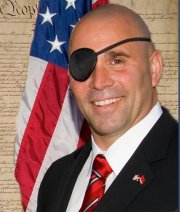
Nick Popaditch was born on July 2, 1967 in East Chicago, Indiana. The youngest of 5 children in his Polish immigrant, working class family, he enlisted in the United States Marine Corps at the age of 18.
He would spend the next 3 years rotating between Okinawa, South Korea, mainland Japan, and Camp Pendleton California. During that time, Nick became a Tank Commander. Nick’s unit was one of the first to deploy in defense of the Kingdom of Saudi Arabia.
During Operation Desert Shield/Storm Sgt Popaditch served at the tip of the spear in Task Force Papa Bear. Commanding a main battle tank, he participated in the clearing of 2 minefields and the subsequent attack through the heart of the Iraqi defense. Upon returning home, Nick married April and began a family.
After 6 years of honorable and faithful service, Nick chose to move on to the civilian world. The day after he got out of the Marine Corps, he went straight to work as a construction worker in La Mesa, California. Soon after, he landed a job as a Correctional Officer for the State of Indiana Department of Corrections. Off he and his family went for a better opportunity. He quickly became the point man on the Cell Extraction Team, a Team Leader on the prison’s elite E-Squad, and was assigned as the Officer-in-Charge of an entire inmate housing unit. Despite his achievements in the Department of Corrections, Nick and April missed life in the Marines. So in the Fall of 1995, Nick reenlisted in the Marine Corps.
After returning to the Corps, Nick sought new challenges. He requested orders to Marine Corps Drill Instructor School, one of the most challenging schools in the military. He was an honor graduate of the course. During that assignment, Nick was promoted to Staff Sergeant and wore the coveted black belt of a Senior Drill Instructor.
Following the attacks on September 11, 2001, Nick requested orders back to the tip of the spear. He returned to the Fleet Marine Force and was assigned as a Tank Commander and Platoon Sergeant. He deployed to the Middle East and commanded a tank in the initial invasion of Iraq and the March-up-to Baghdad in 2003. He distinguished himself in numerous offensive operations against enemy forces, was decorated for valor on the battlefield, and was the subject of a historic photo taken in Baghdad at the fall of the Saddam Regime. Nick remained on the streets of Baghdad and was a firsthand witness to the demise of a dictatorship and the rise of freedom.

Nick returned to Iraq in 2004, and was again assigned as a Tank Commander and Platoon Sergeant, this time in the City of Fallujah. Nick, now a Gunnery Sergeant, led the attack into the Jolan District, the most intense fighting of the battle for Fallujah, Operation Vigilant Resolve. For his actions against enemy forces and valor on the battlefield, Gunnery Sergeant Nick “Gunny Pop” Popaditch was awarded the Silver Star.
On April 7, 2004, during an intense exchange of firepower, Nick “Gunny Pop” Popaditch was struck in the head by a rocket-propelled grenade and was blinded along with other serious life threatening injuries. After returning home, the Navy Surgeons were able to restore 8% of the sight in Nick's remaining eye. Without their brilliant expertise and care, Nick would have remained totally and permanently blind. Gunnery Sergeant Popaditch was forced into medical retirement from the Marine Corps after 16 years of arduous and faithful service. He also received the Purple Heart for wounds sustained in combat.
After his retirement from the Marine Corps, Nick quickly moved onto his next mission to rehabilitate and once again serve his fellow man and this great Nation. His new mission was to become a high school teacher. In the Spring of 2011, Nick graduated Magna Cum Laude from San Diego State University. Along the way, Nick Popaditch wrote his memoir Once a Marine. The book was the 2009 Military Writers Book of the Year. It was also selected to the Commandant of the Marine Corps Official Reading List for 3 consecutive years and is currently on the Sergeant Major of the Marine Corps Reading List. Nick's book is considered by many to be a leadership manual, a "must read" for leaders both in and out of the military. Nick's second book, The Ultimate Marine Recruit Training Guidebook was recently released. In this book, Nick Popaditch draws on his experience at Marine Corps basic training as a recruit, a drill instructor and that of a combat seasoned Marine to create a practical, comprehensive guide to success for every new or prospective recruit.
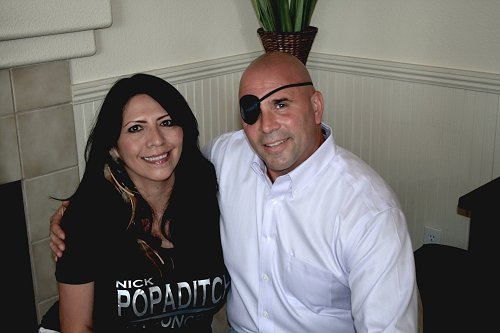
Nick and April currently reside in Chula Vista. Nick is a highly sought speaker across the nation. He speaks predominately to multiple law enforcement agencies as well as schools, corporations, and churches. He serves his community as a Mentor/Instructor at the Midwest Marines Focus Program. Nick is currently pursuing a Master’s Degree in Education.
He was the GOP nominee for Congress in 2010 for California’s 51st District.
Nick’s drive to serve our nation continues as he is now a candidate for the United States House of Representatives in California’s 53rd Congressional District.
~~~~~~~~~~~~~~~~~~~

The House of Representatives is the people’s house. Let’s return it to the people with an engaged constituency.
Common Sense Principles
Taxation
Taxation is necessary, but is not an endless source of funding for pet projects. Your income belongs to you, not the federal government. Every dollar taxed is one less dollar in the private sector where it can grow the economy and jobs. Finally, the use of taxation for class warfare is morally wrong.
Balanced Budget
Congress is now on its 4th consecutive year of spending the American taxpayers’ money without a budget. Spending must be cut and tax revenue must be raised to fix the damage that has already been done.
Legislative Equality
Our founding documents guarantee all Americans equal protection under the law. Legislation that favors one group of Americans over another for arbitrary reasons is institutional discrimination. This is not only a brazen contradiction of The Bill of Rights, but also unethical and immoral. We, the people deserve better.
Grow The Economy
Congress can do three things immediately to grow the economy. Lower taxation will lead to more private sector growth. Remove obstructions to domestic energy to lower production costs. Remove regulations that create non-competitive monopolies. None of these require taxpayer funding. All will result in economic growth and jobs.
Representation or Compromise
A Congressional Representative must represent all of the people in that Congressional District, not the ones he agrees with. That involves compromise here, in the 53rd district. When your Congressman goes to Washington and compromises with politicians who represent others, they are no longer representing you. That is unacceptable.
Pro-Family
Congress has the responsibility to protect American families through strong national defense and federal law enforcement. Congress has the duty of putting American families ahead of lobbyists in energy and taxation policy. Finally, Congress must not attempt to replace your family with the federal government.
Pro-Life
The Declaration of Independence reaffirms all have a God-given right to life, liberty, and the pursuit of happiness. Prior to the Civil War, one citizen’s right to property could exceed another’s right to life and liberty. That contradiction has been fixed by great civil right’s advocates in our history everywhere in our society except for children in the womb.
A Promise to Seniors
We owe our liberty and prosperity to the generations before us. Social security and Medicare were promises made to these great Americans. I will never betray a promise nor will I see all their hard work and success sold away on my generation’s watch.
Approval vs Incumbency
Congress has a 10% approval rate and a 90% re-election rate for incumbents. The skill set it takes to get the job is not the same skill set it takes to do the job.
National Defense
Congress must make an informed decision, based on fact, and reflective of the will of the American people before America’s sons and daughters are put in harm’s way. Congress has attempted to play both sides of the fence in our current conflicts.
Immigration
The issue of immigration is clouded in propaganda. When one side says the phrase “immigration reform” the other side hears “amnesty.” When that side says “enforcement” the first side hears “discrimination.” This is a result of mixed messages, inconsistent policies, and political pandering.
Voter ID
Congress has sent our military members to 2 different combat zones to protect the integrity of elections abroad. Simultaneously, our military absentee votes are being erased by fraudulent votes here. Congress has an obligation to stop this civil rights violation. Content.
For Those Who Serve
Those who protect and defend our community, borders, and Nation deserve the same courage from their Congressional Representative that they display every day on their jobs.
2010 CAMPAIGN

The "We The People" conservative Candidate who will listen to you and
take your conservative message from California's 51st District to Washington DC
I believe that your representatives should actually listen to you and act in your best interest. For too long the've ignored us. And we've all felt the effects of career politicians acting only for themselves.
His voting record in Congress has resulted in unsustainable government spending, higher taxes, decreased border security, and the HIGHEST UNEMPLOYMENT RATE in the entire nation.
Nick says, "The best way to create jobs is to keep more money in the district and lower taxes for EVERYBODY, not just some. You should decide how to spend your money, not Washington."
Don't be fooled by misleading promises of only raising taxes on the 'wealthiest Americans.' Any tax in our community affects all of us. If taxes are raised on the owner of the grocery store, he raises the price of groceries. If a local corporation is taxed at a higher rate, people lose their jobs and the price of their product goes up. We ALL pay the tax. Worse still, the money goes to Washington to employ bureaucrats who don't know you, don't care about you, and get their raises by taking more of your money or borrowing some of our children's.
As your Congressman, I will reverse the flow of money. I will keep revenue here in the 51st District by lowering taxes for EVERYBODY, not just some. You decide how to spend YOUR money, not Washington. Business owners can hire new employees, instead of sending their money out of the community as taxes. Increased defense and border spending brings money from Washington to our community. The military and Border Patrol not only live in and protect our community, but also bring Federal tax dollars here. They buy homes here, spend paychecks here, and their hardware is manufactured here.
Reverse the flow. Don't send money to Washington, Bring money from Washington to our community-legitimately and Constitutionally Let's work together to bring jobs and prosperity back to the 51st District.
LOWER TAXES CREATES JOBS
INCREASED DEFENSE SPENDING CREATES JOBS
A SECURE BORDER PROTECTS JOBS
Don't be fooled by Pelosi and Filner's class welfare. Their tactics will only continue to bleed our community dry of revenue and destroy even more jobs. You can't take water out of half of the bucket.
Nick says, "I pledge moral clarity and real commitment to the limited government
promised by our Constitution."
Government solutions to everyday problems are not "free," efficient, or effective. Every Government "solution" comes with a price tag and requires a sacrifice of some of your individual freedom. Our Constitution is a limiting document. That means it guarantees a small, limited Federal government. Washington, D.C. is expanding out of control and would be unrecognizable to our Founding Fathers.
The Obama administration, the Pelosi Congress, and Bob Filner have ignored the Constitution and the clear will of the American people. Congress stuffs bills with earmarks, riders, and even bribes. Votes are purchased. Legislators confiscate your hard-earned tax dollars and bloat bills to over 2000 pages of waste, corruption, and deception. Even worse, this is done with deficit spending
borrowed money from our children's generation.
As your Congressman, I pledge moral clarity and a real commitment to the limited government promised to you by our Constitution. I will vote "No" on any bill that is not Constitutionally justified, that contains earmarks or unrelated "riders," or requires deficit spending, regardless of the party who initiates or supports the bill.
I will make it my mission to scrub our legislation and bring clean bills up for honest votes.
NO TO EARMARKS
NO TO RIDERS
NO TO DEFICIT SPENDING
The choice is clear in 2010.
The economic freedom that comes from limited government
or the slavery of expanding government and the march toward czars and socialism.
Nick says, "Our Constitution clearly defines the RESPONSIBILITY of the Federal Government to provide for the Nation's security. This is absolutely necessary in today's dangerous world"
America stands as the world's champion of freedom against tyranny. September 11, 2001, demonstrated unequivocally that there are those in this world who hate liberty and our way of life. I am not interested in understanding them or capitulating to them. Did President Franklin Roosevelt ask Americans
on December 8, 1941, to understand why the Japanese bombed Pearl Harbor or learn how to work with them?

No. Americans must be as safe as possible, and our country as strong as possible.
"Opening dialogue" or the closing of detention facilities to make our enemies "like us" cannot accomplish this.
This behavior is cowardice in the face of our enemies.
We will never forget that we were attacked on 9-11-2001

As your Congressman I pledge to rebuild our military to pre-1990 levels, which is absolutely necessary in today's dangerous world. Our Constitution clearly defines the RESPONSIBILITY of the Federal Government to provide for the Nation's security. More troops, equipped with the best technology this great Nation can build, supported by empowered intelligence to fight both traditional wars and asymmetrical conflicts.

Secure Borders
Nick says, "Our Constitution DEMANDS that the Federal Government provide security for its citizens here at home. Enforce current laws to
promote legal immigration."
I'm not for a closed border . . . . . just a legal border."<
Until we control our Nation's borders and know who is crossing them, talk about "immigration reform" is just that:
Talk.
Until we enforce our immigration laws in our cities, "immigration reform" means absolutely nothing.
California's 51st Congressional District is the largest section of US/Mexico border of any Congressional District.
Bob Filner has dodged taking any position for 18 YEARS!
Instead, he has hidden in the shadows and allowed this issue to be defined by those who do not live here.
As your Congressman, I will take a leadership role in our border security.
I will reject any legislation regarding "immigration reform" that does not start with and also demonstrate proven enforcement first. Complete the border fence. Increase funding to put more border patrol agents where they are most needed: on our borders protecting our national security.
Your tax dollars will pay for more border patrol agents who are equipped with the latest technology. Our Constitution DEMANDS that the Federal Government provide security for its citizens.
This does not mean our border should be closed. Many people come here legally to work, seek citizenship, or conduct commerce. We need to know who they are and why they are here. Our immigration laws must be followed and I will propose legislation to cut ALL Federal funding to any city that is operating as a so-called "sanctuary city."
Your Federal tax dollars will not go to those who ignore Federal law.
Nick says, "The only institution 'Too Big To Fail' is 'The Traditional American Family.' We need to protect our families."
I believe in Strong Family Values and I'm Pro-Life / Life Begins at Conception.
"The only institution 'Too Big To Fail' is... 'The Traditional American Family'.
We need to protect our families and it is our duty to protect every human life."
Defending our families is a matter of honor. The Pelosi Congress and Bob Filner carry the water of every special interest with a well funded lobbyist, yet leave the backbone of this country, our families out in the cold.
Activist judges release pedophiles early to prey upon our children. Every election season, politicians promise commitment to better education, yet deliver nothing during their terms. Not on my watch.
Our families need their Government to represent them, not special interest.
Sentencing mandates on Pedophiles
School Vouchers to empower parents, not teachers' unions
Most importantly, as your Congressman I will bring moral clarity, duty, leadership,
and honor to our Congress.
As a decorated United States Marine, Nick Popaditch has clearly shown his loyalty and love of country. Nick was a career marine who first served his nation in combat as a Sergeant during Operation: Desert Shield and Storm – after an Honorable Discharge – he decided to re-enlist and returned to the front lines in Operation: Iraqi Freedom. Nick’s willingness to serve is testament to his character and heart.
Now, Nick is once again going to serve and protect the liberties that make this nation truly exceptional, this time from liberals in Washington. Californians deserve a leader like Nick who’ll fight for limited government, champion a strong national defense and work to secure borders.
Nick believes that the only institution that should be deemed ‘too big to fail’ is the ‘the traditional American family.’ Nick Popaditch believes it is our duty to protect our families and protect every human life, without exception – because he understands that life begins at conception.
Huck PAC and I are proud to endorse Nick Popaditch for U.S. Congress. I hope you’ll join me in sending this great man to Congress, where he can continue fighting for what is right.
Pro-Life/Life Begins At Conception
Nick says, "It is our duty to
protect every human life."
"A Marine's Word Is His Bond"
Volunteer
Get Involved
Help Nick win the election in November by volunteering on the campaign.
We need to spread the word around the entire new 53rd congressional district that Nick is the right man to represent its citizens.
Bring your energy and your talents to our campaign!
Make phone calls, knock on doors, network on social media sites like Facebook and Twitter.